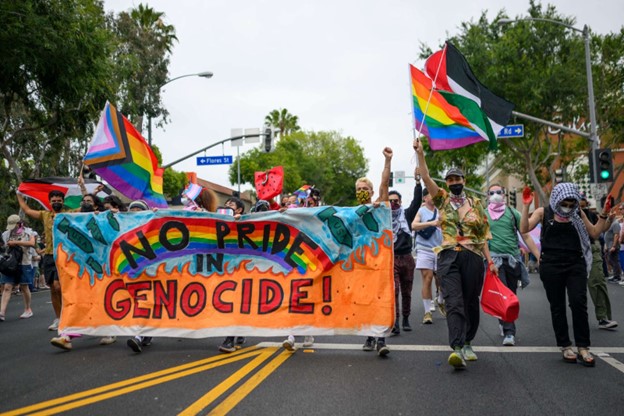
This year’s InQueery Symposium calls for work that considers the intersections that are at the heart of this slogan. “No Pride in Genocide” implicitly expresses queer solidarity with Palestinians, but it is also a provocation to consider the connections between queer, feminist, and anti-imperialist politics. The slogan performs a queer kind of refusal. It is a rejection of settler colonialism, occupation, and genocide on the one hand; but it is also a refusal of instrumentalization and a literal weaponization of queer identities in the service of empire’s brutal violence. As Palestinian and queer studies scholar (and InQueery keynote speaker this year) Sa’ed Atshan reminds us: “Queer liberation cannot be realized while colonial subjugation persists” (Queer Palestine, 222). Atshan’s work and the symposium in general aim to highlight the untenability of gay tunnel vision—at all times, but especially in this moment. No pride in genocide is another way of saying not in our name. This year’s symposium thus calls for work which reminds us that queerness—both as a theoretical analytic and political project— must contravene forever war. Queer and feminist projects of liberation can never be compatible with roadblocks, checkpoints, and the bombing of schools and hospitals.