This year marks the 50th anniversary of the Program in Women’s, Gender, and Sexuality Studies at Washington State University. This archival timeline was created to celebrate and honor the program by showcasing the individuals and organizations that have labored and contributed to WGSS over the years, as well as the events associated with them. Please note that this timeline may be incomplete or contain gaps; please do not hesitate to add information.The materials on this page are historical documents presented in their original form for archival and historical purposes. Some materials are scans of printed documents and may not be fully accessible to all users, we will continue to work on making all documents accessible.
Timeline of Women’s, Gender, and Sexuality Studies at Washington State University
1895-1960s
- 1895: Young Women’s Christian Association (YWCA) of WSU became the first women’s organization on campus, focused on empowering women and eliminating racism.
- 1908: Josephine Hoeppner was the first woman to receive an advanced degree at WSU.
- 1912: The Association for Women Students (AWS) was founded by the Washington State College women students.
- 1931: Carol Plaquet was the first female vice president of Association for Women Students at Washington State College (ASWSU).
- 1943: Doris Pierson was elected as the first female president of ASWSU.
- 1948: Gladys Jennings was the first woman of color to earn a graduate degree.
- 1957: Frances Penrose Owen became the first woman to serve on the Board of Regents.
- 1969: the Pullman Committee for Women was set up to plan actions on behalf of women.
1970s
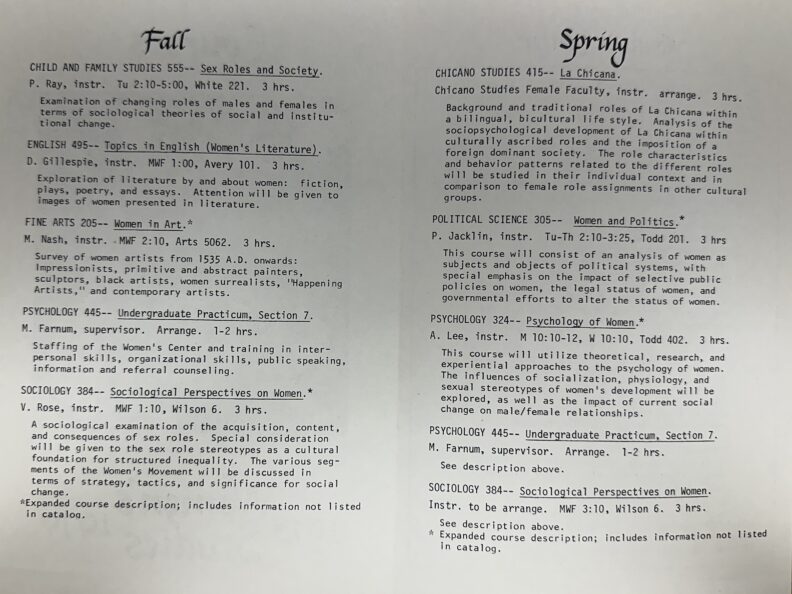
- 1970: The first women’s studies course at WSU, developed by the Associated Women Students and the subcommittee on faculty women, was offered during the spring.
- 1971: A proposal for the creation of a WSU Commission on the Status of Women was submitted to President Glenn Terrell, and thus The Commission on the Status of Women was established.
- 1972: Pullman had a local chapter of the National Organization for Women. The Washington legislature added an equal rights amendment to the state constitution. The same year, Title IX, a federal law mandating gender equity for any educational program or activity that received federal financial support, was also enacted. Both stated women deserved an equal share of public resources, including funding and access to facilities.
- 1973: The first ever WSU salary equity review, which The Pullman Committee for Women had pushed for, was completed and resulted in salary adjustments for some women ranging up to $6,000.
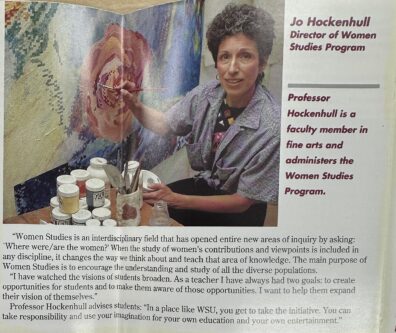
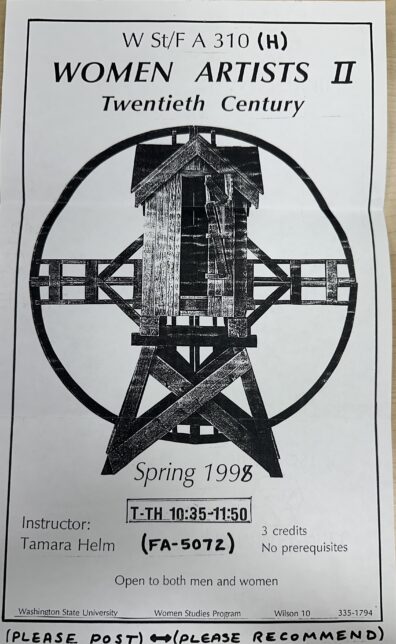
- 1973: Jo Huckenhull came to WSU in 1973 and was the first woman hired to teach in the Fine Arts Department. She served over a decade as the program director of Women’s Studies at WSU from 1986-1996. In the MASC there are several boxes of her documented work during the course of her time as program director. Huckenhull has many collaborations with international scholars and collaborative projects that have been presented at the UN.
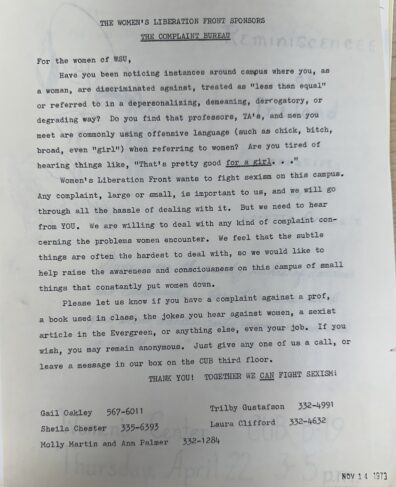
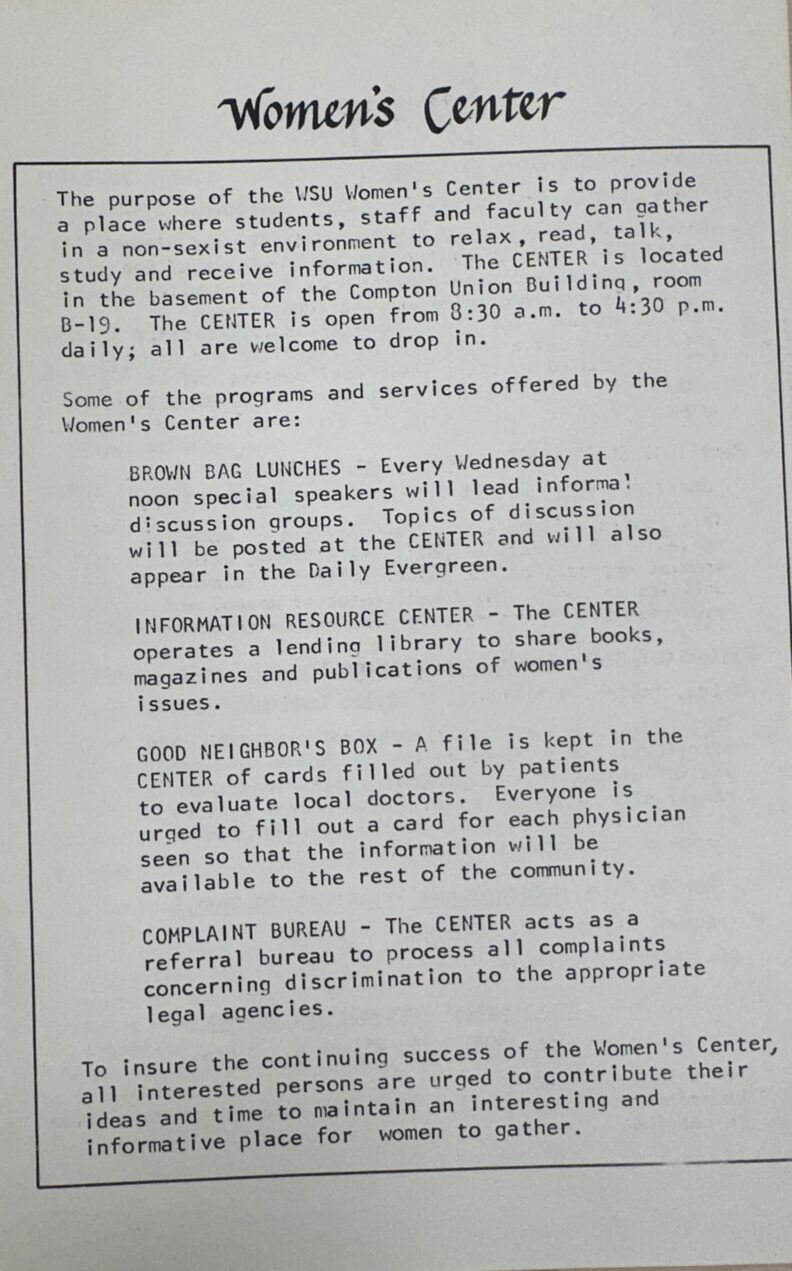
- 1973: On November 14, 1973, The Women’s Liberation Front Sponsors submit a letter to The Complaint Bureau to fight sexism on campus and invited anyone to submit complaints to the CUB third floor office.
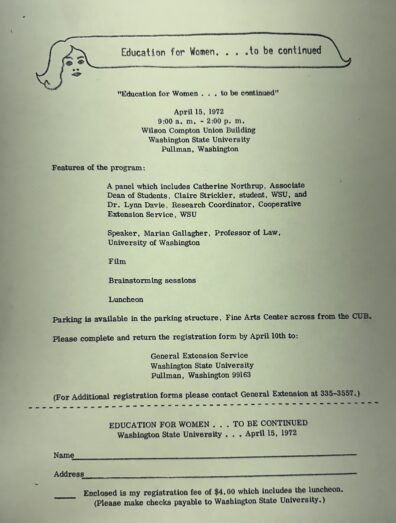
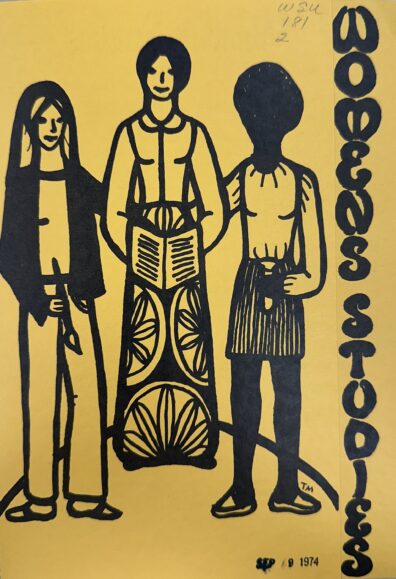
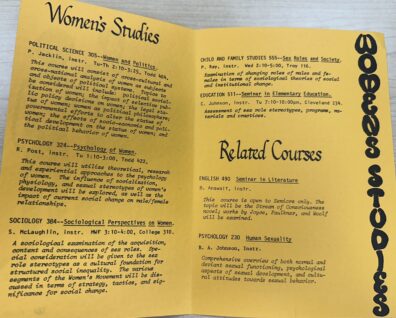
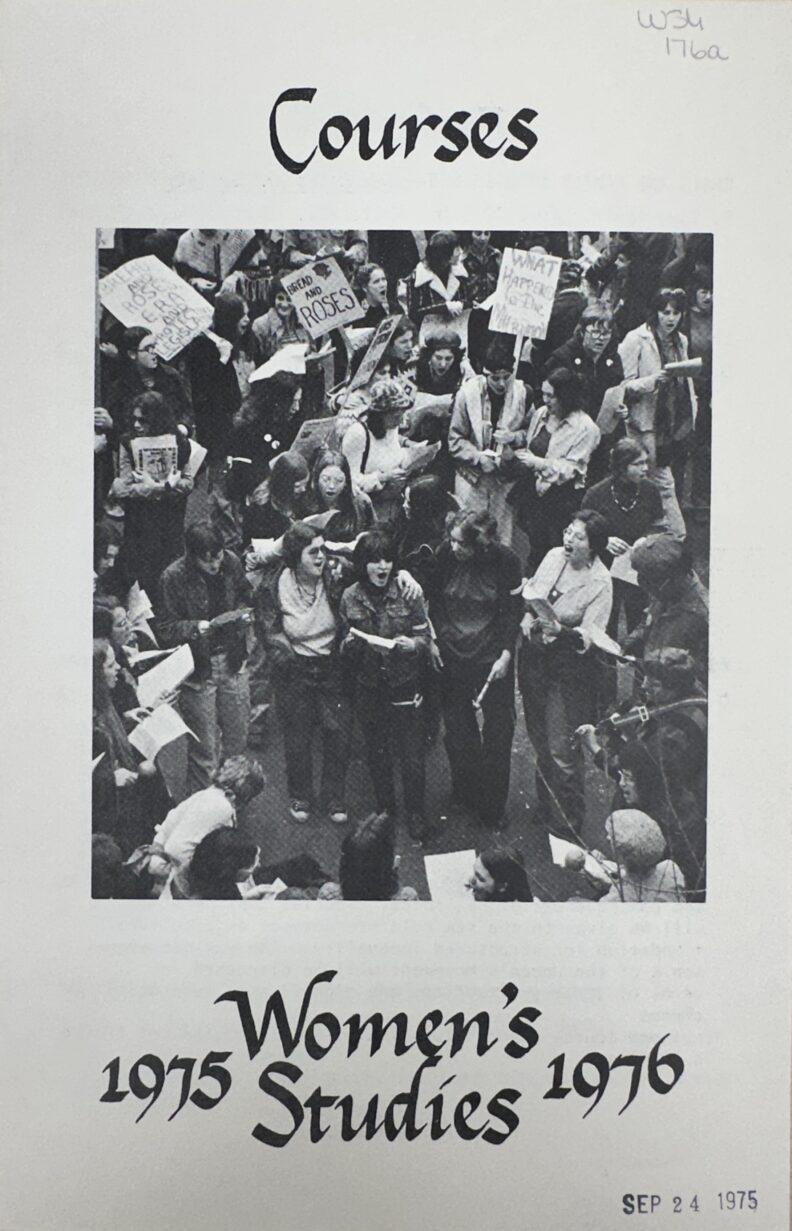
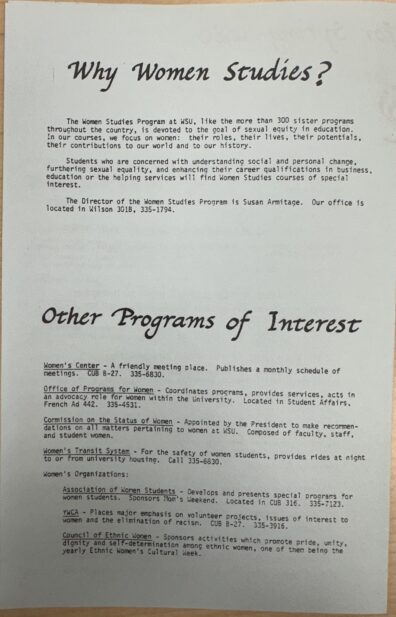
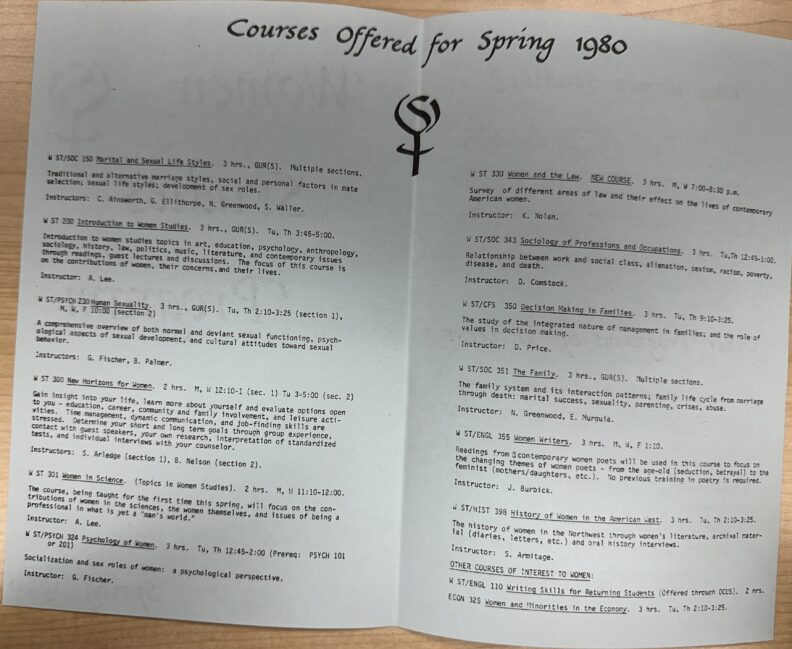
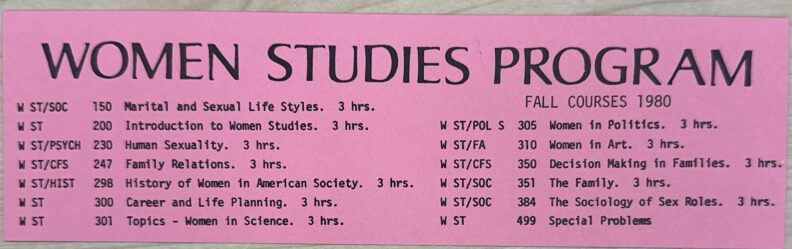
- 1974: Women’s Studies Course and News Pamphlet distributed on September 9, 1974.
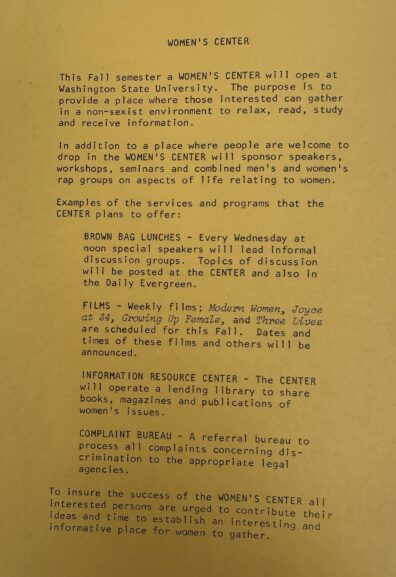
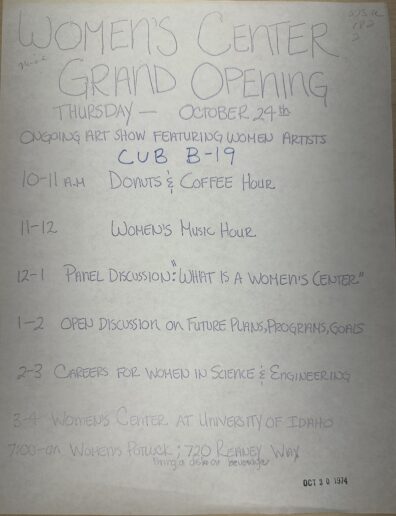
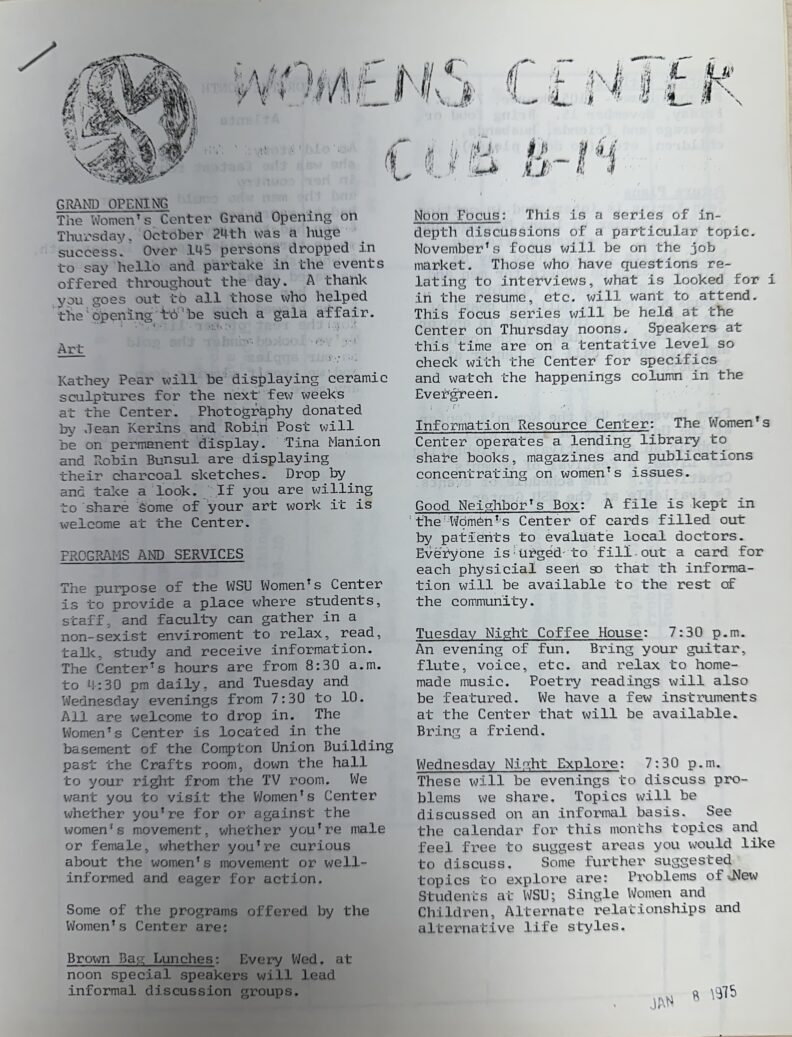
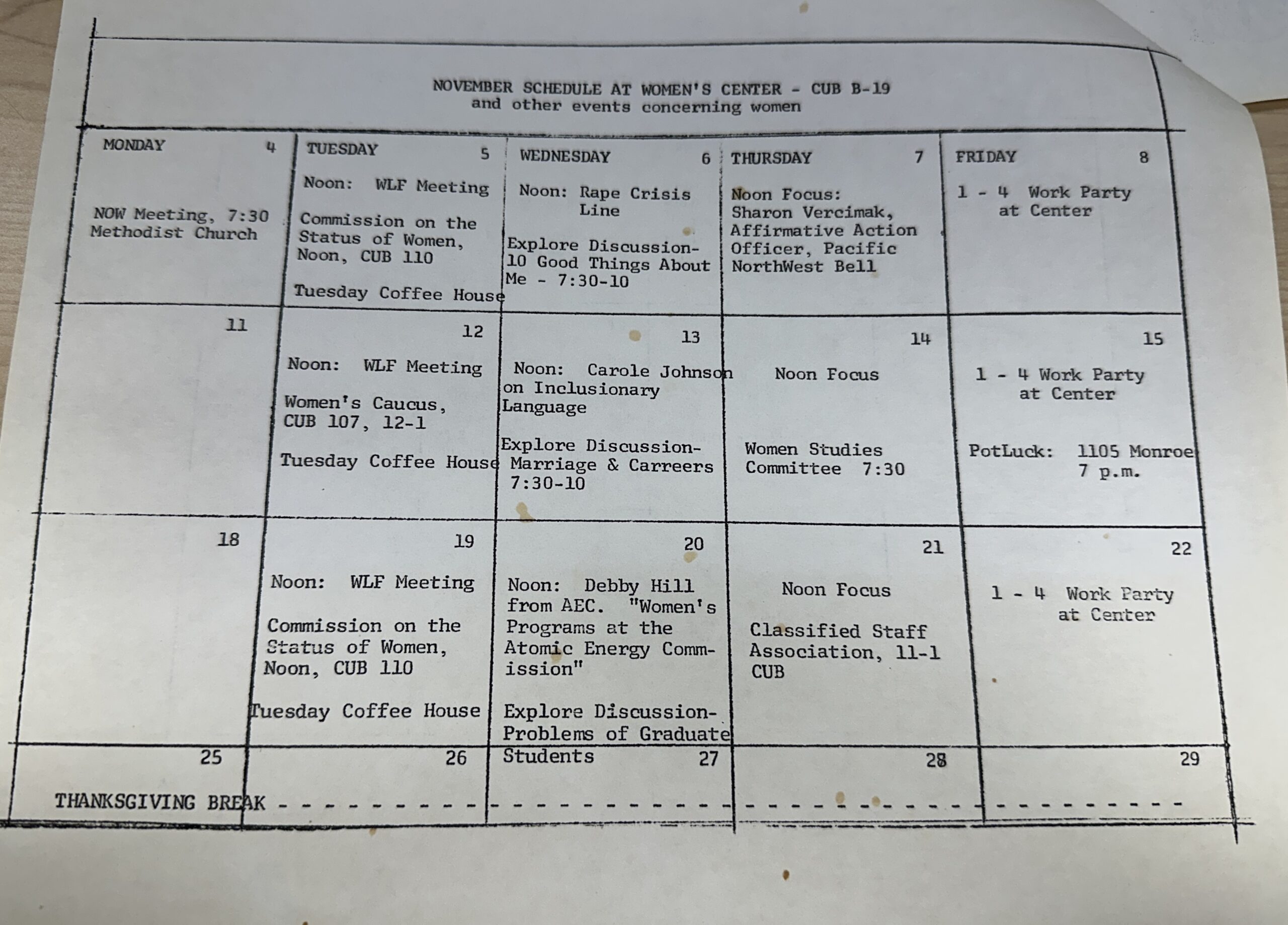
- 1974: Women’s Center grand opening on October 24, 1974.
- 1975: Faculty Women’s Committee (AFW) was established.
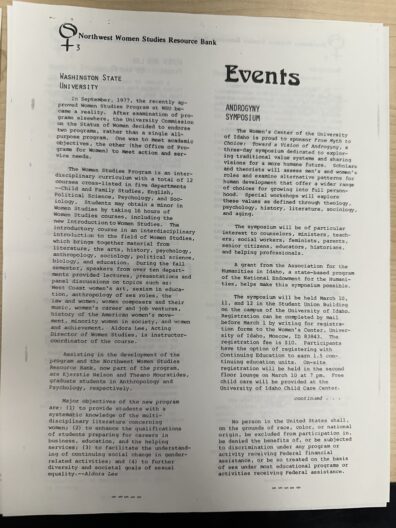
- 1975: The Northwest Women Studies Resource Bank Newsletter began issuing publications. In 1978, The Resource Bank had issued two publications. These newsletters included events happening not only at WSU or UI but included many programs and events that took place in the Northwest.
- 1977: Women’s Transit begins at WSU to help make travel safer for women at night.
- 1978: Sue Armitage was the first director of the WSU Women’s Studies Program (1978-1984). She also served on the Commission on the Status of Women (1978-1988) and was the AFW President from 1979-1980.
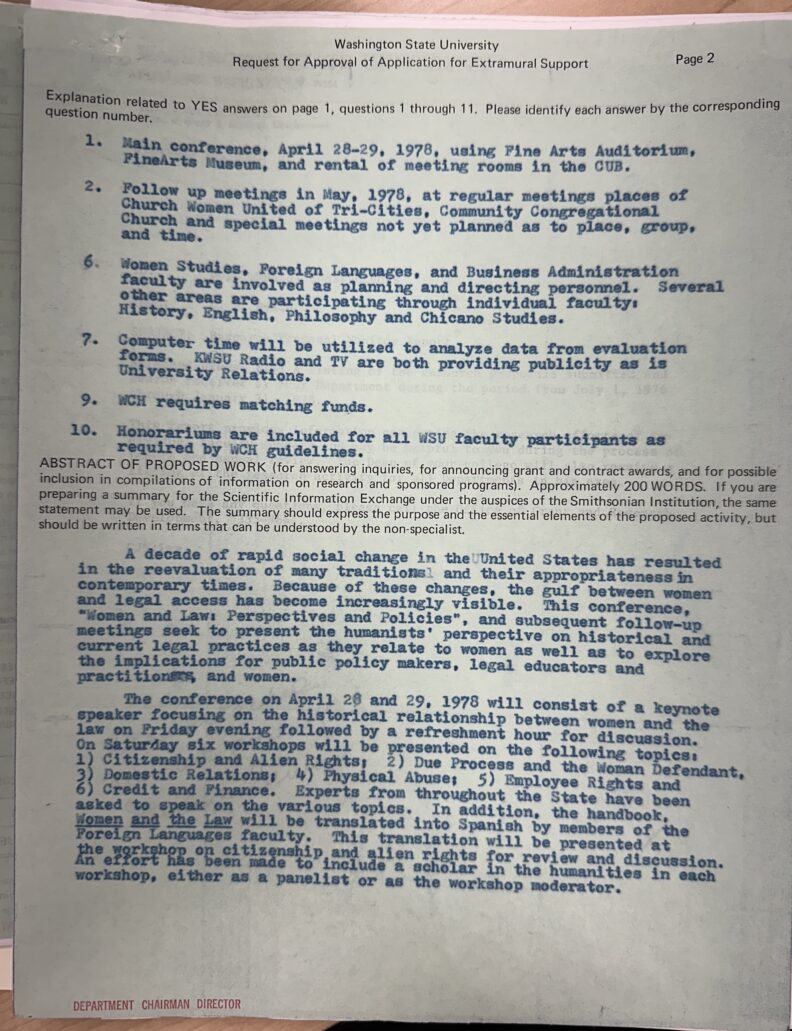
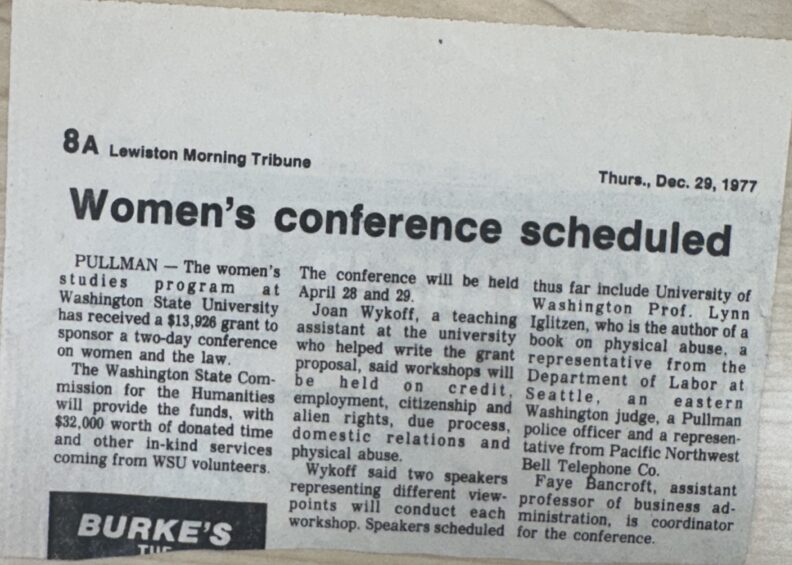
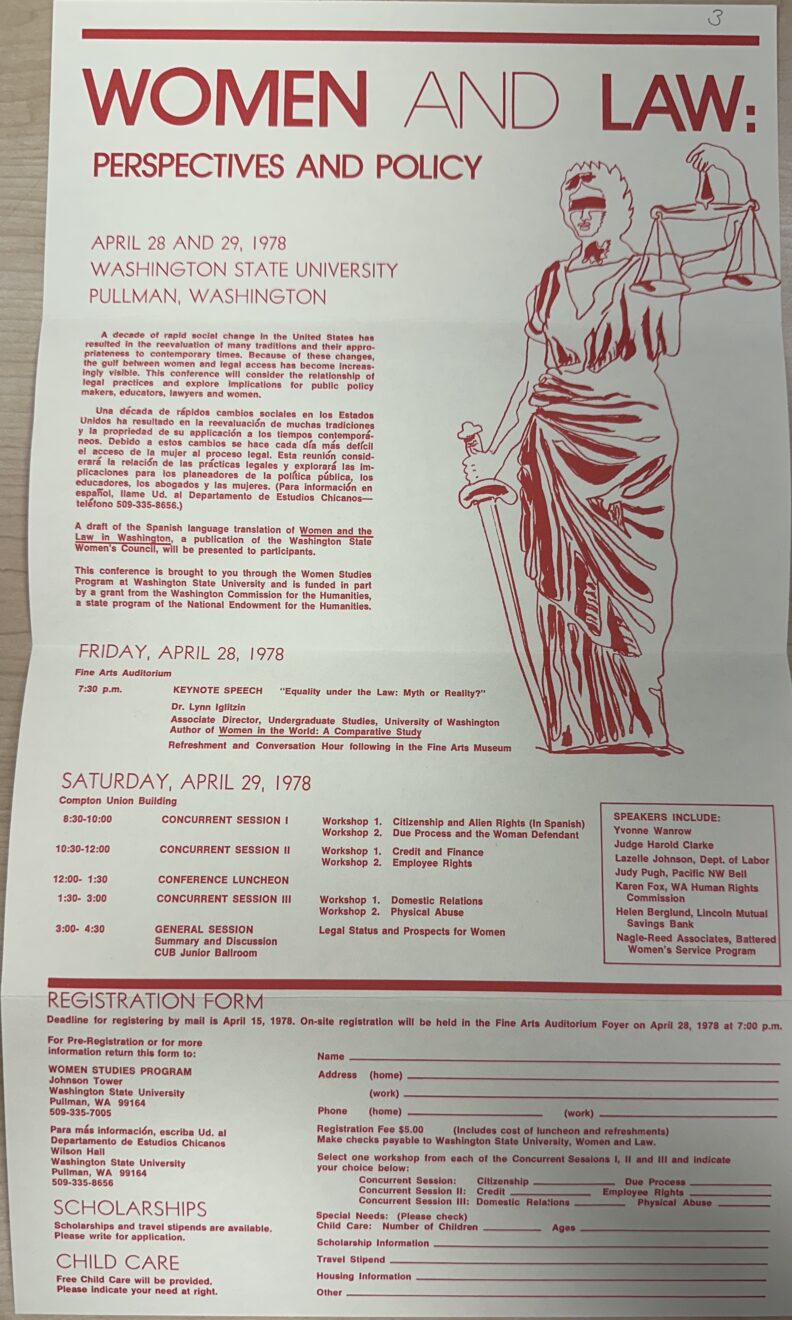
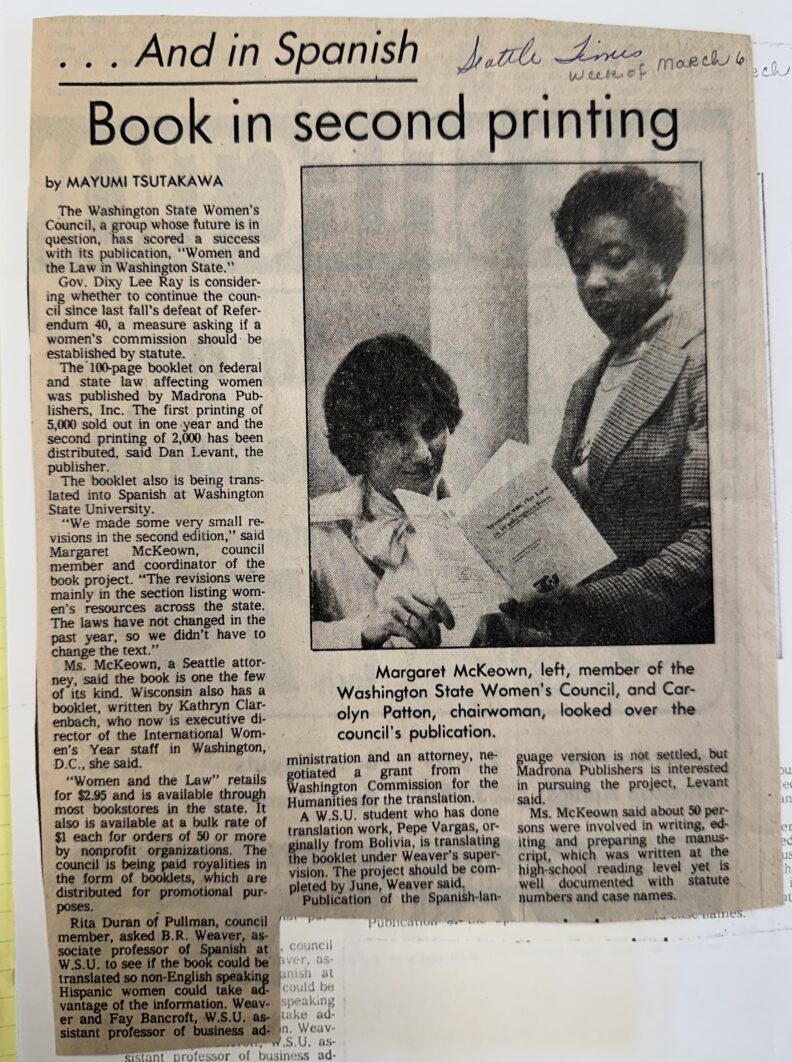
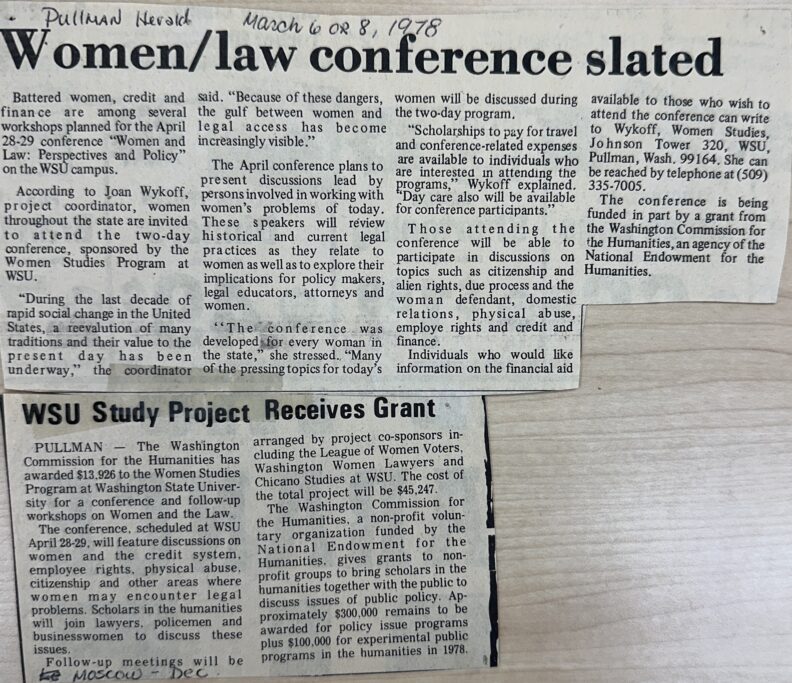
- 1978: WSU Women’s Studies Program receives grant funded by Washington Commission for Humanities and the WSU Women’s Studies Program holds “Women and Law” from April 29-29, 1978. This program held at Washington State University for the purpose of informing audiences of women about their legal rights. Faye Bancroft, Assistant Professor of Business Law at WSU directed the program which included workshops on citizenship and alien rights, due process and the woman defendant, domestic relations, physical abuse, employee rights, and credit and finance. The Washington State Women’s Council published the 100-page book pamphlet “Women and Law”. The Seattle Times news clipping shares that “Women and Law” pamphlet will also be translated to Spanish at Washington State University for distribution.
- Women Studies, Foreign Languages, and Business Administration faculty were involved as planning and directing personnel. History, English, Philosophy and Chicano Studies were also involved.
- The conference was held April 28-29 1978, using Fine Arts Auditorium Fine Arts Museum, and rental of meeting rooms in the CUB. Conference Title: “Women and Law: Perspectives and Policies” intended to present the humanists’ perspectives on historical and current legal practices and to explore the implications for public policy makers, legal educators and practitioners and women.
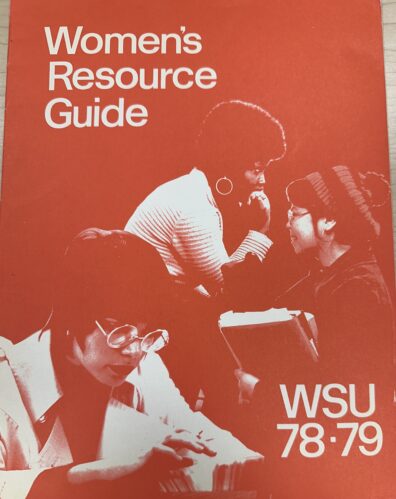
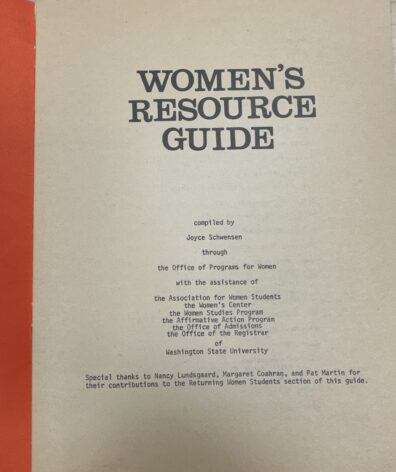
- 1978-1979: Joyce Schwenson compiled a Women’s Resource Guide through the Office of Programs for Women with the assistance of AWS, the Women’s Center, the Women’s Studies Program, the Affirmative Action Program, the Office of Admissions and the Office of the Registrar at WSU.
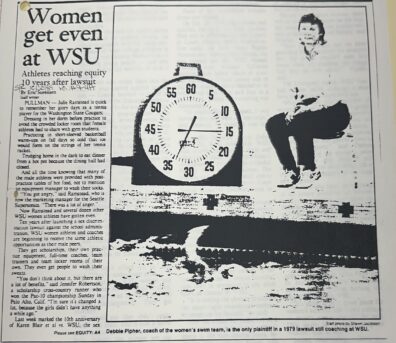
- 1979: Female athletes filed a lawsuit against WSU for the equal opportunity for women to compete. Sue Durrant volleyball and basketball coach at WSU served as the lead plaintiff and sued the university in 1979 for gender equity. Sue Durrant was also on the Commission on the Status of Women from 1975-1976.
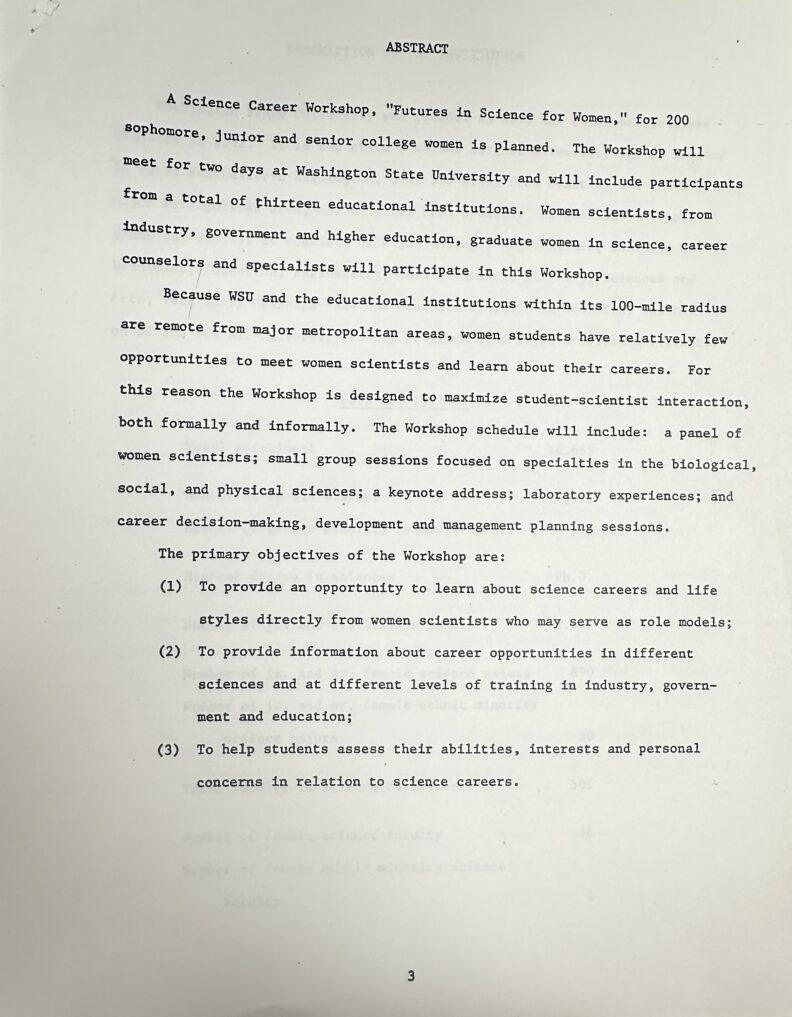
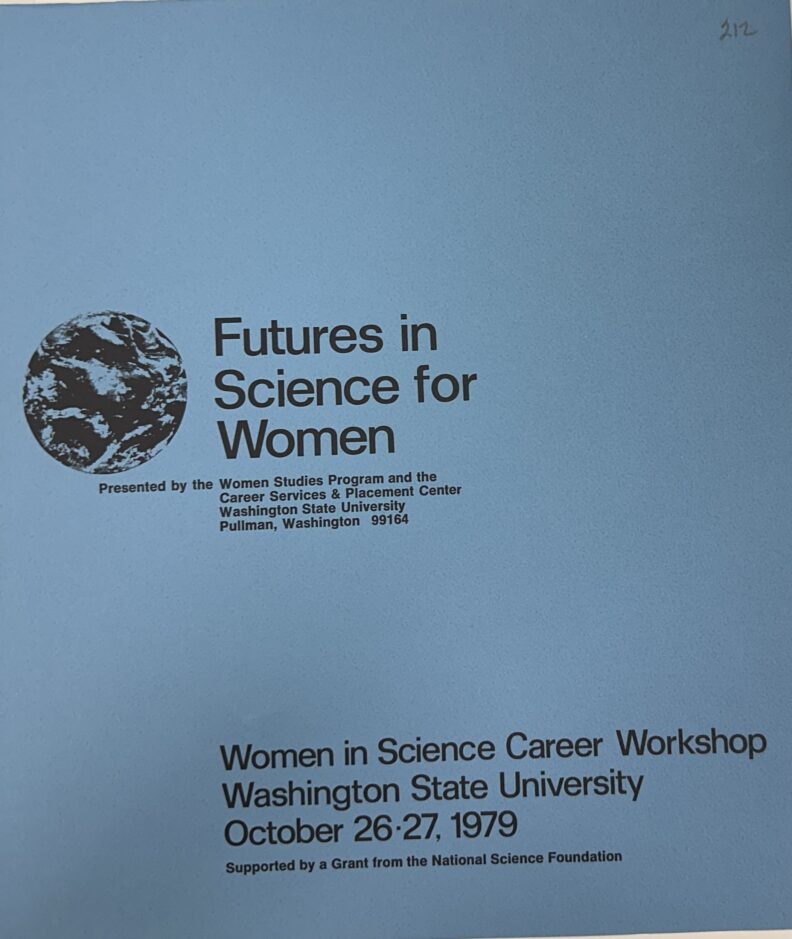
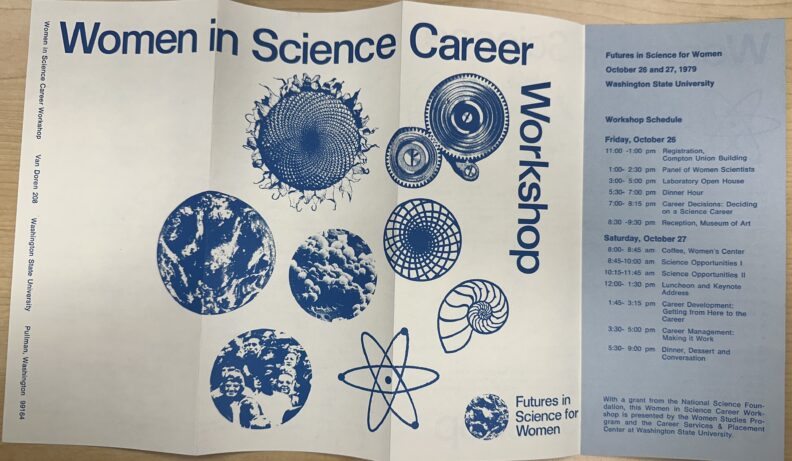
- 1979: From October 26-27, the Women Studies Program and the Career Services and Placement Center in Pullman present a Women in Science Career Workshop. The Futures in Science for Women was a science career workshop sponsored by the WSU Women Studies Program and directed by Dr. Aldora Lee. The National Science Foundation (NSF) funded the program which was held on at Washington State University in 1979. Women scientists, career counselors, and specialists participated in the two-day program, this workshop intended to create an opportunity for women students to meet women scientists and learn more about their careers, especially because WSU and other educational institutions within the 100-mile radius are remote from major metropolitan areas, women students do not have the opportunity to meet women scientists regularly. This conference received a grant from NSF of $12,000.
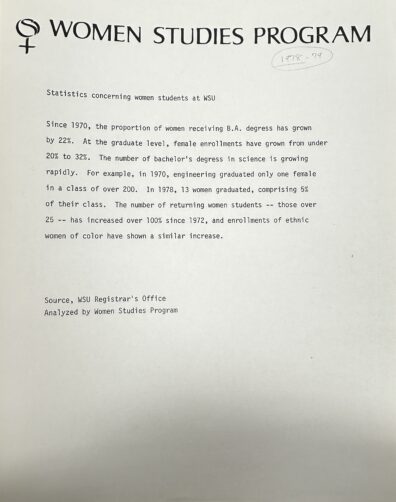
- 1978-1979: Women Studies Program analyzes and present statistics concerning women students at WSU.
1980s
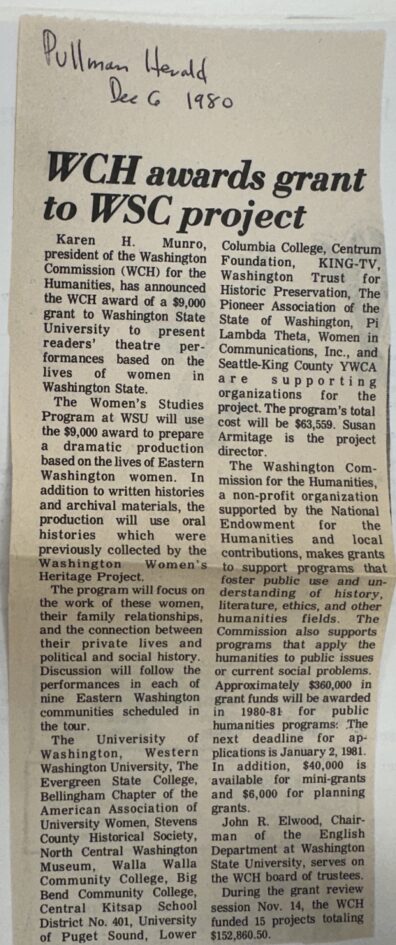
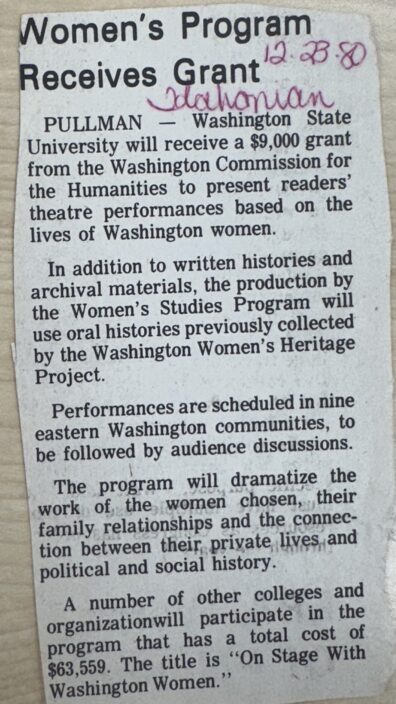
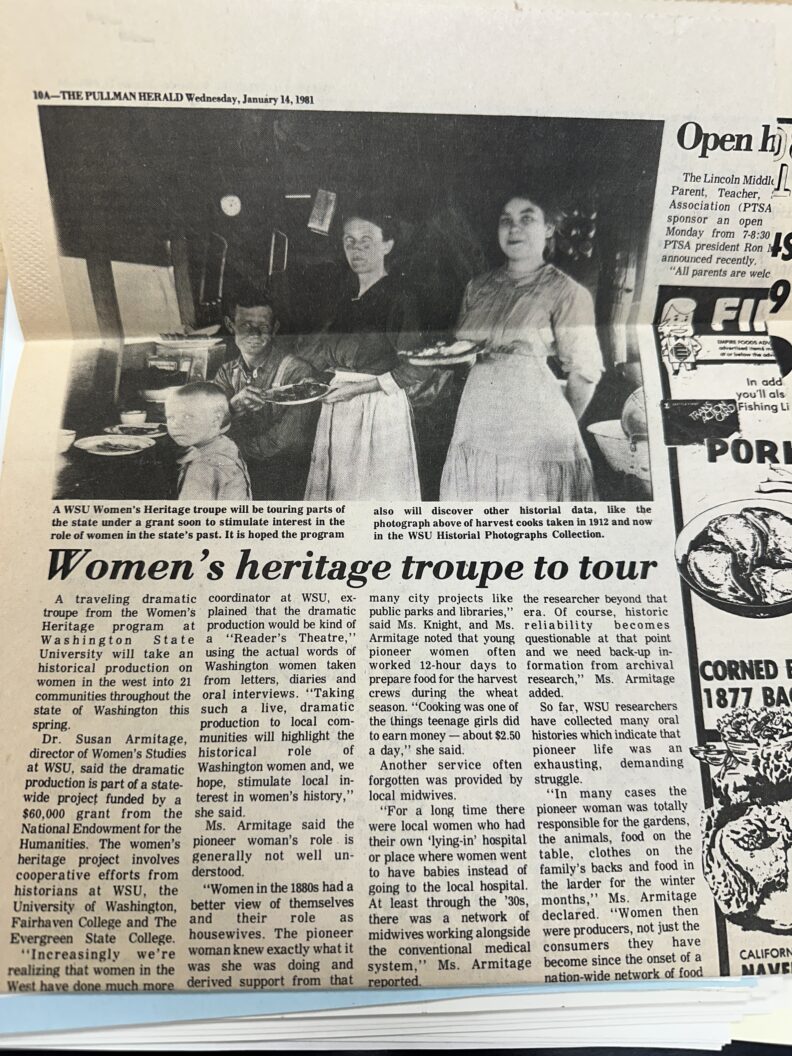
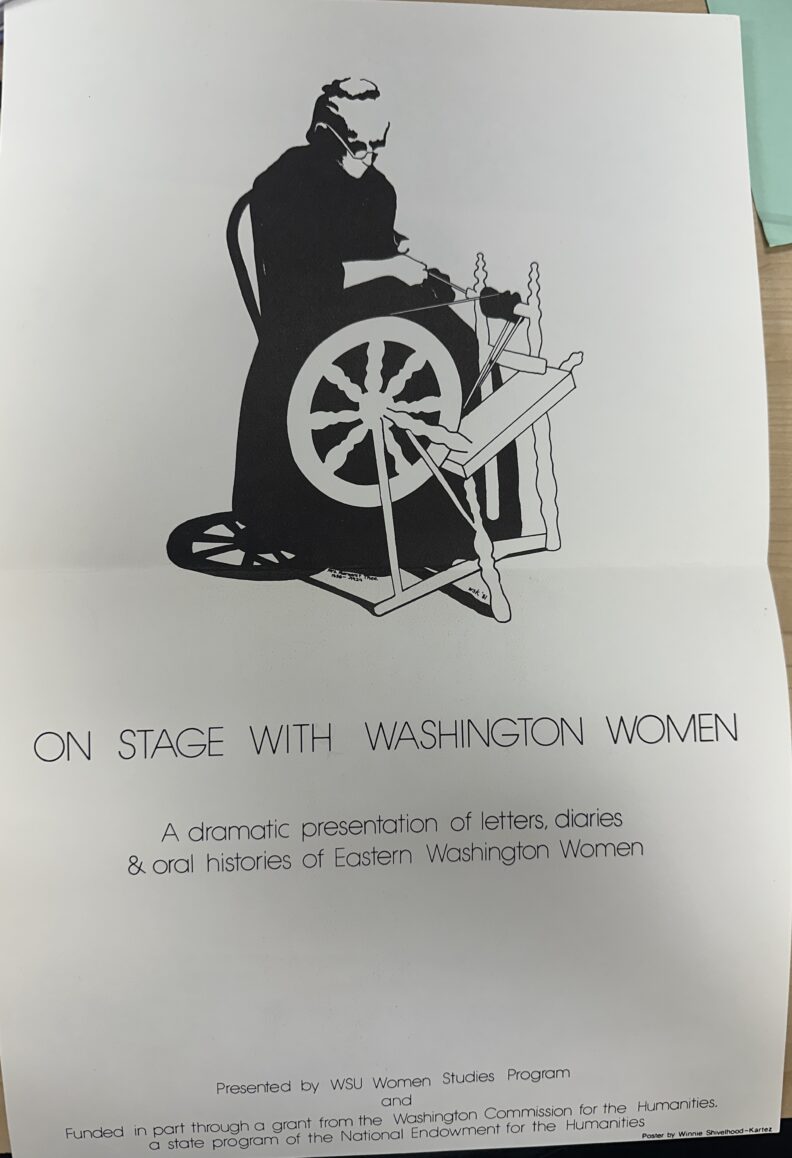
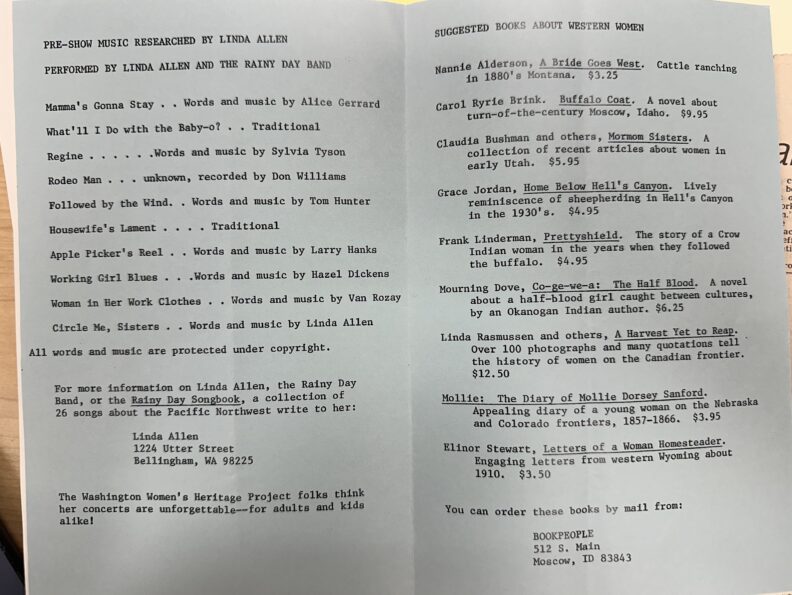
- 1980: Washington State University receives a $9,000 grant from the Washington Commission for the Humanities to present readers’ theatre performances based on the lives of Washington women. The performance includes written histories, archival materials, produced by the Women’s Studies Program , the performance also used oral histories previously collected by the Washington Women’s Heritage Project. The title is “On Stage with Washington Women”
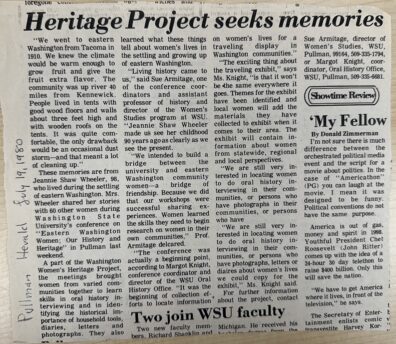
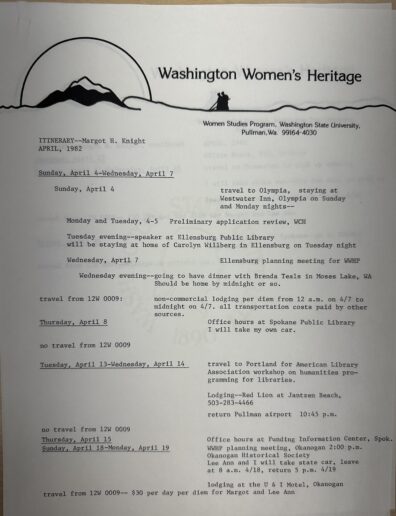
- From April 4-19 the Women Studies Program sponsored the Women’s Washington Heritage Project 1980-1983. Exhibit from women’s diaries, letters, oral histories, reminiscences and photographs, Margot H. Knight and project contributors found two major themes in the historical records of Washington Women: working and caring. From housework to paid work to volunteer work. Also caring for their relationships, community concerns, friendships at work and at play, family relationships and the love and caring of women for children.
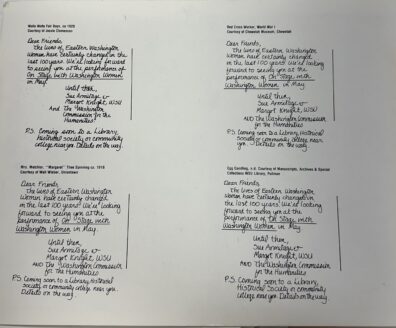
- On Stage with Washington Women (1980-1982) was a script and performance based on materials (written sources, archival and local; and oral histories) already collected in 1980 by the Washington Women’s Heritage Project (funded by National Endowment for the Humanities) and prepared and organized by regional offices in Seattle/Olympia, Bellingham and Pullman with central direction from the sponsoring organization, the Women’s Studies Program at WSU.
- Gail Miller sifted through hundreds of pages of information furnished by Dorothy Garceau, Sue Armitage, Jenel Virden and Margot H. Knight to produce a 26-page script. Three regional dramatic productions with a common theme—the lives of women in Washington state will be performed in 21 locations throughout the state in May and June 198. The productions will be based on materials (written sources, archival and local; and oral histories) already collected in 1980 by the Washington Women’s Heritage Project (funded by NEH) and prepared and organized by regional offices in Seattle/Olympia, Bellingham and Pullman with central direction from the sponsoring organization, the Women’s Studies Program at WSU.
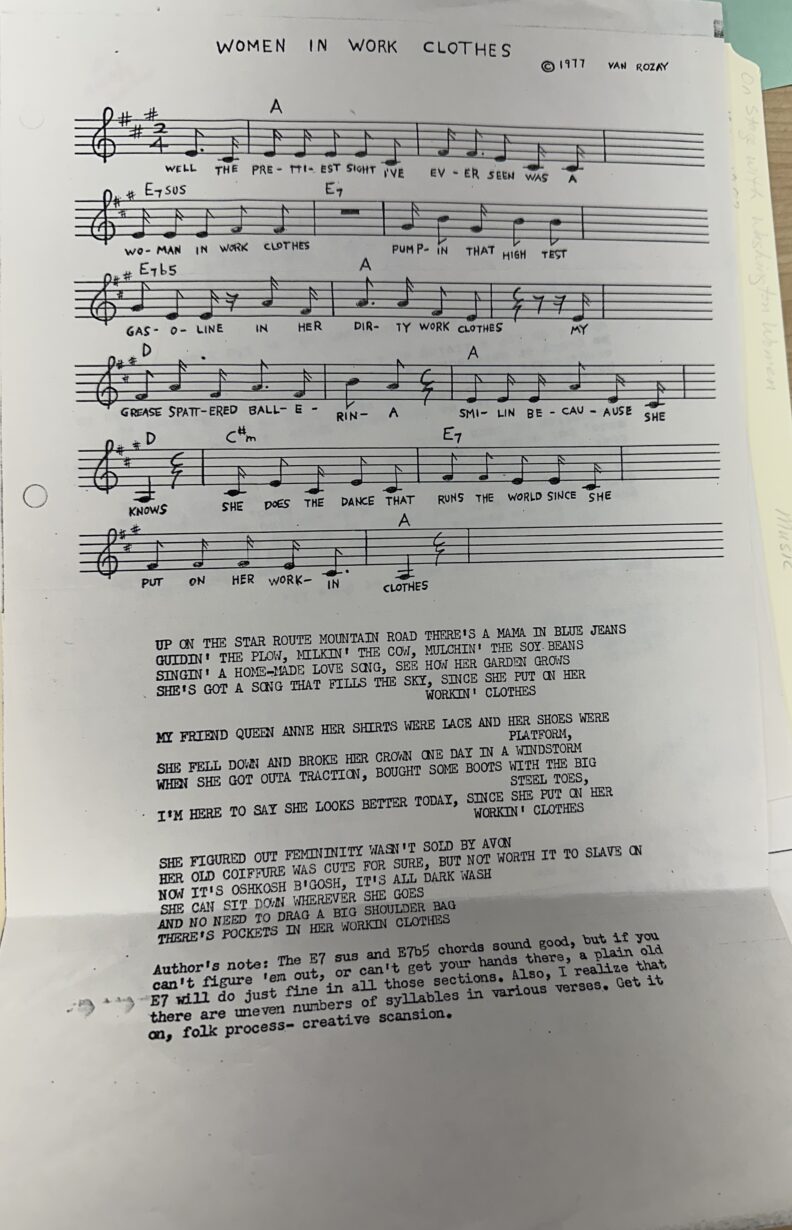
- 1981: Dodie Murphy Wagner Papers (1980-1981). This collection found in the Manuscripts, Archives, and Special Collections, Washington State University Libraries is created by former student, Dodie Murphy Wagner where she conducted a series of interviews by nine women artists from Eastern Washington, and a study of women in bluegrass music. This was part of her work in a Women’s Studies class- Women’s Studies 499 on January 21, 1981. Located in Cage 910.The interviews were conducted in the fall of 1980 and the project was completed in January of 1981. Along with the interviews, there are photographs of artwork from each artist.
- The second project was also conducted in 1981 and consisted of a study of women in Bluegrass music. The artists represented in this collection are Opal Fleckenstein, Madge Gleeson, Jo Hockenhull, Marilyn Lysohir, Nancy McCutchen, Carol Lynne Pool, Jennifer Stabler, Nicole Tafflinger, and Nancy Wriggle. The artists all reside in the Palouse, their artwork does not have easy exposure to the population centers of the Pacific Northwest. “Their inspiration comes from the landscape, the lighting, the color and the atmosphere”. Dodie shares that the following criteria for selecting the artists: the artist considered herself to be a professional artist, not a “Sunday afternoon painter”; that substantial output by the artist would not be necessary if the artists was a teacher of fine arts at a college or university; that representation by a reputable and well known gallery in Washington State or other parts of the country would show professional quality, and that living in the Palouse or Eastern Washington had influenced the artist and her work” (page 2-3, Dodie Murphy Wagner Nine Women Artists).
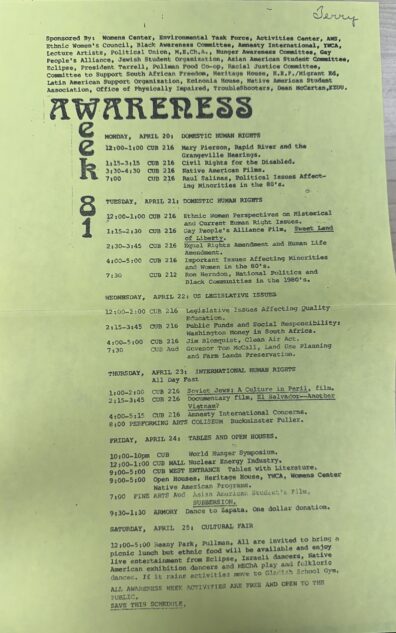
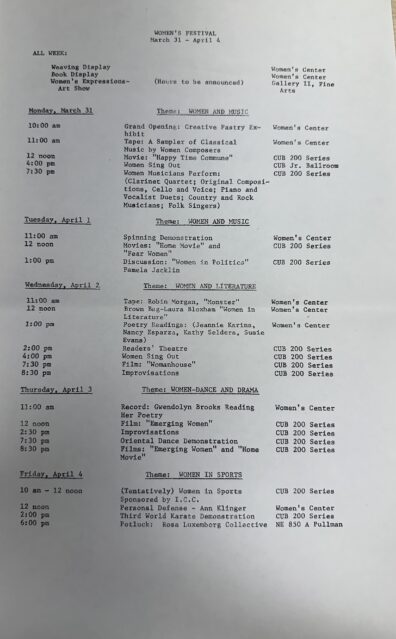
- 1981: Awareness Week hosted at WSU from April 20-25 sponsored by Women’s Center, AWS, Ethnic Women’s Council, Black Awareness Committee, YWCA, Gay People’s Alliance, and many more written on the poster.
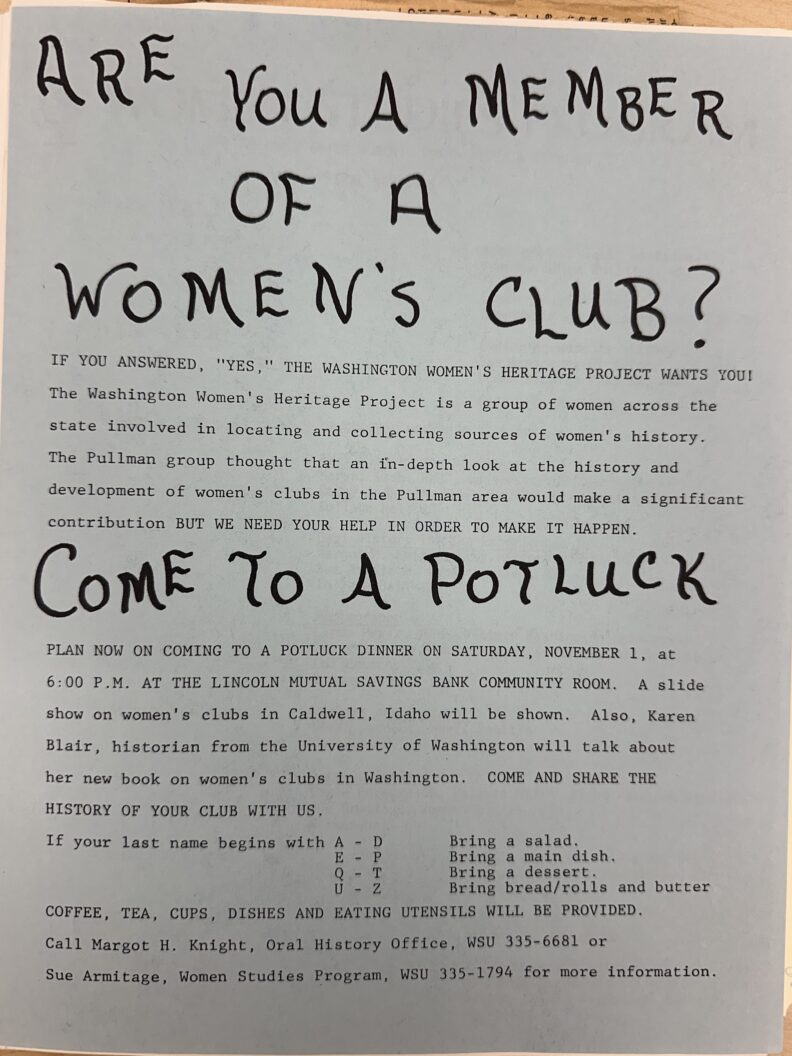
- 1981: Flyers and pamphlets organized by Margot H. Knight and Sue Armitage from the Women Studies Program in 1981 detailing a Potluck held on November 1st for The Washington Women’s Heritage Project.
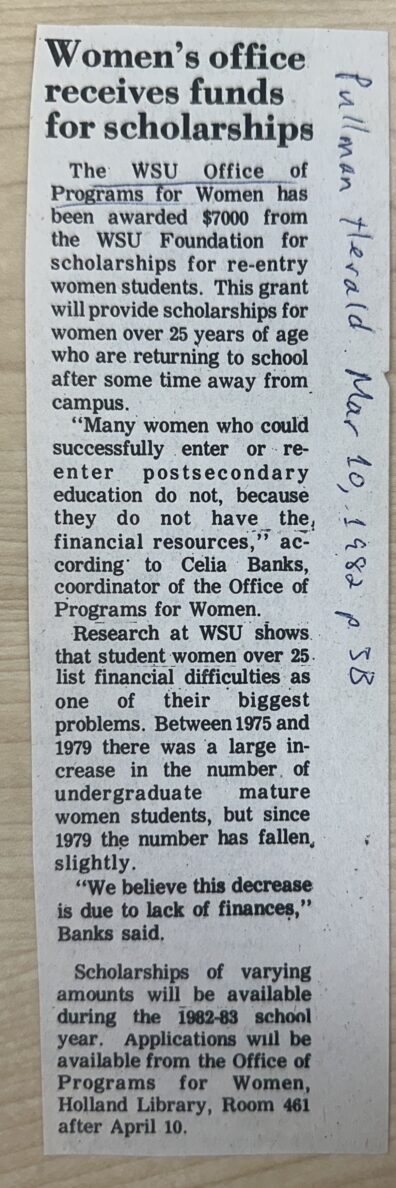
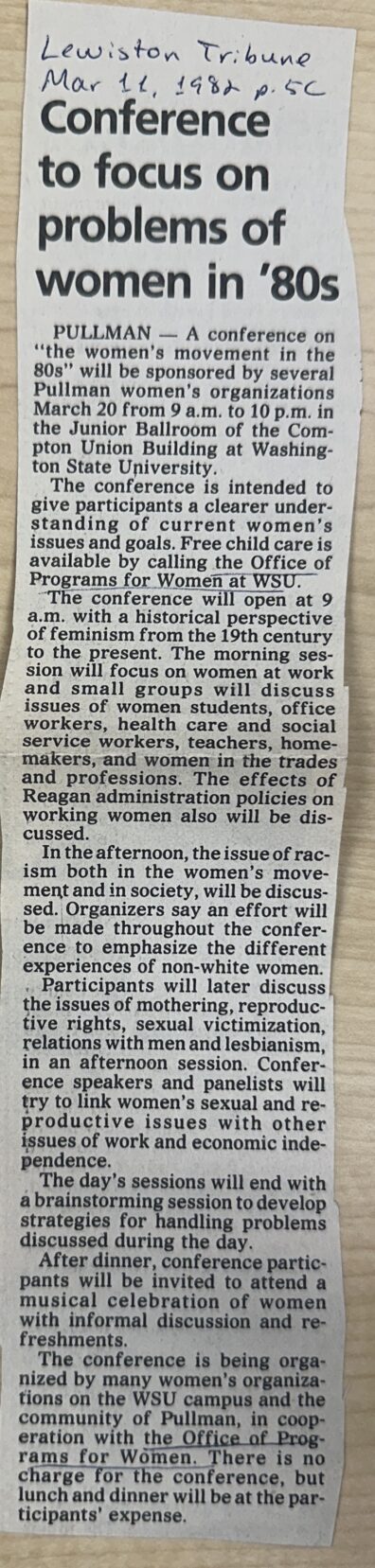
- 1982: The Pullman Herald Newspaper covers news that the WSU Office of Programs for Women has been awarded $700 from the WSU Foundation for scholarship for re-entry women students.

- 1983: The Washington State Superior Court granted gender equity provisions for WSU women’s athletic programs in Blair et al. vs WSU.
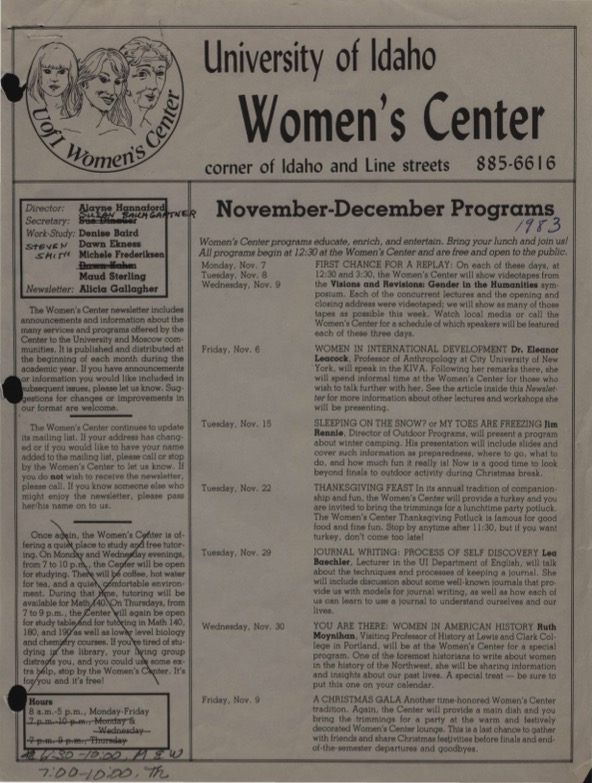
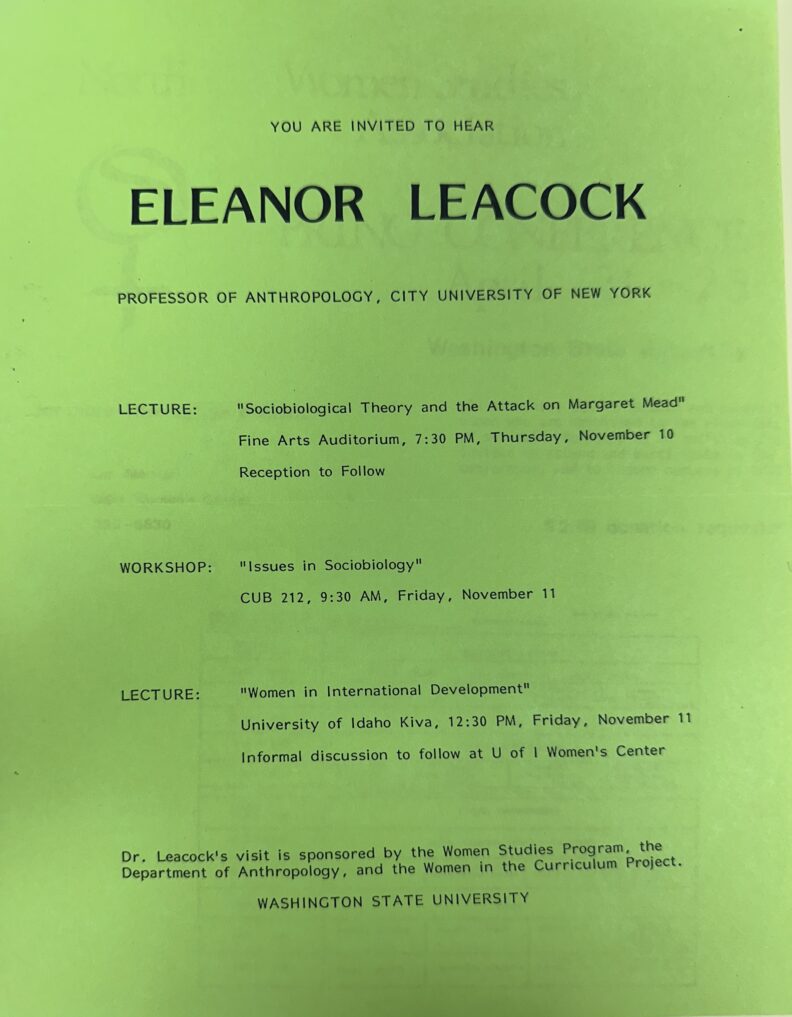
- 1983: Eleanor Leacock, Professor of Anthropology, City University of New York visits WSU, sponsored by the Women Studies Program, the Department of Anthropology, and the Women in the Curriculum Project. Poster archives about the lecture are found both at Washington State University and University of Idaho.
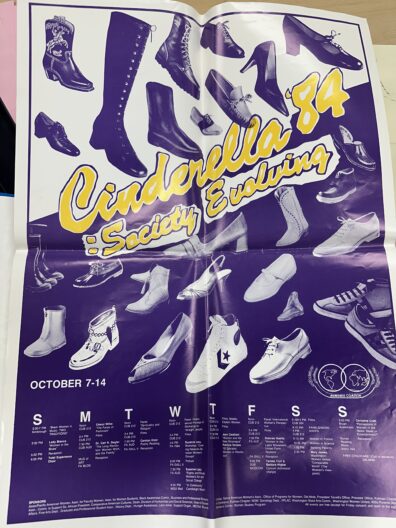
- 1984: From October 7-14, 1984, Women Studies Program sponsored the “Cinderella’84: Society Awareness” event for the Awareness Coalition along with many other sponsors.
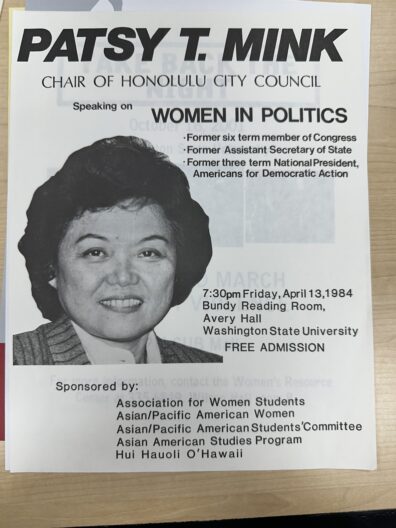
- 1986: Jo Huckenhull begins to serve as the program director of Women’s Studies at WSU, which she serves over a decade from 1986-1996.
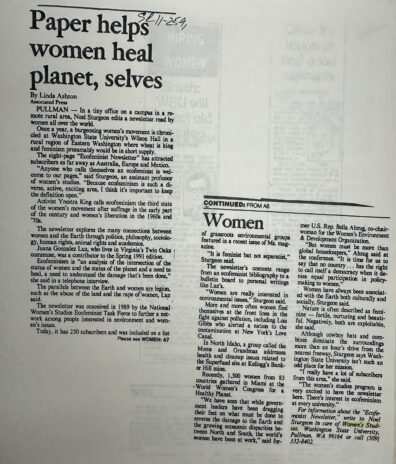
- 1989: The National Women’s Studies Ecofeminist Task Force conceives the “Ecofeminist Newsletter” edited by Professor Noel Sturgeon, Women Studies Faculty member.
- 1989: Washington Student Women Athletes and Coaches reach equity resolution after the ten-year sex discrimination lawsuit Blair vs. Washington. Track athlete Karen (nee Blair) Troianello ’80 was the lead student plaintiff and coach and faculty member Sue Durrant ’62 represented the coaches and faculty.
1990s
- 1990: Four women writers discuss topics including ethnic and political diversity of writers, during WSU’s “Vision of Color Women Writers’ Conference” in early March. Paula Gunn-Allen, Lorna Dee Cervantes, Jayne Cortez and Laureen Mar. Conference coordinated through the Women’s Resource and Research Center and is sponsored by the YWCA, Associated Women Students, Asian Pacific American Women, Native American Women’s Association, Black Women’s Caucus, Mujeras Unidas, Office of Minority Affairs, Women’s Studies and Visual Performing and Literary arts committee. It is part of the 1990 unity and diversity celebration.
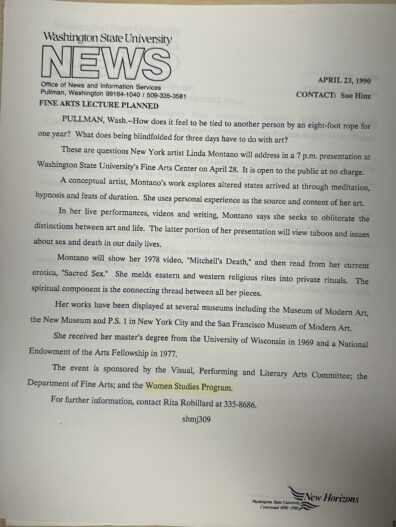
- 1990: On April 23, 1990, New York artist Linda Montano addressed a presentation at Washington State University’s Fine Arts Center. This event was sponsored by the Visual, Performing and Literary Arts Committee; the Department of Fine Arts; and the Women1 Studies Program.
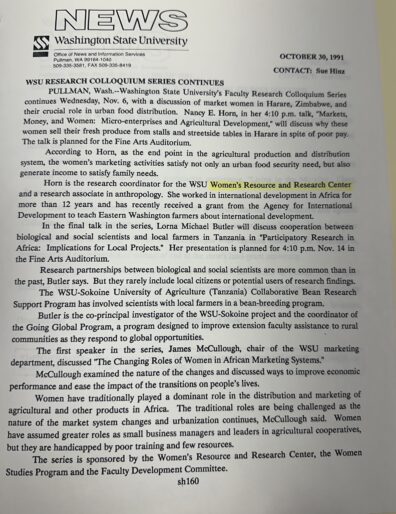
- 1991: Washington State University’s Faculty Research Colloquium Series discussion was hosted on November 6, 1991. The series was sponsored by the Women’s Resource and Research.
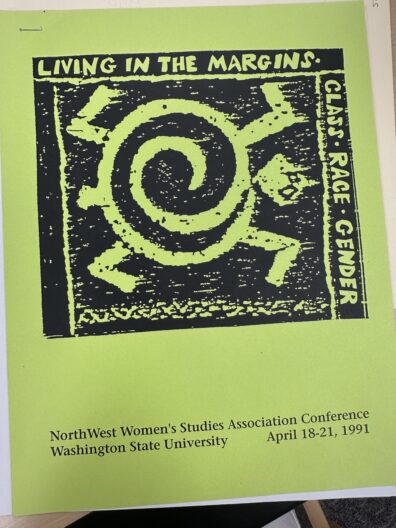
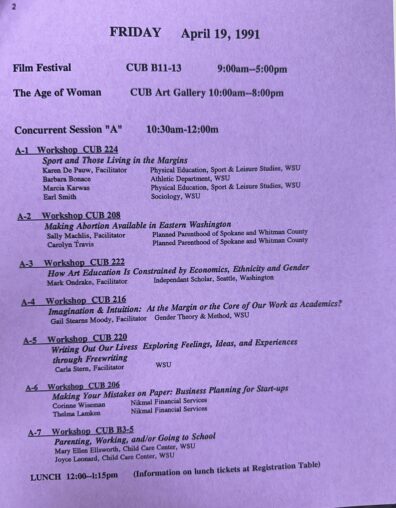
- 1991: From April 18-21 the Northwest Women’s Studies Association Conference was organized at Washington State University. The conference was titled “Living in the Margins: Class, Race, Gender”.
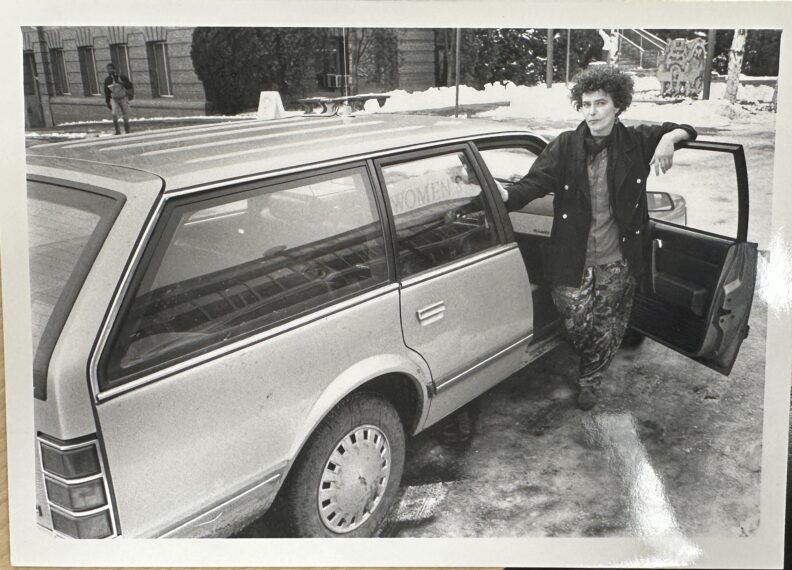
- Women’s Transit driver Sandi Carlton photographed in 1992.
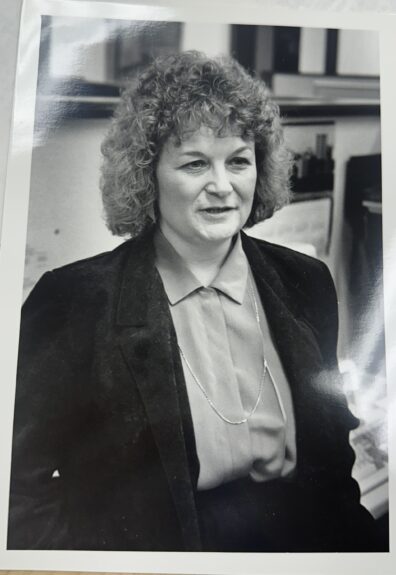
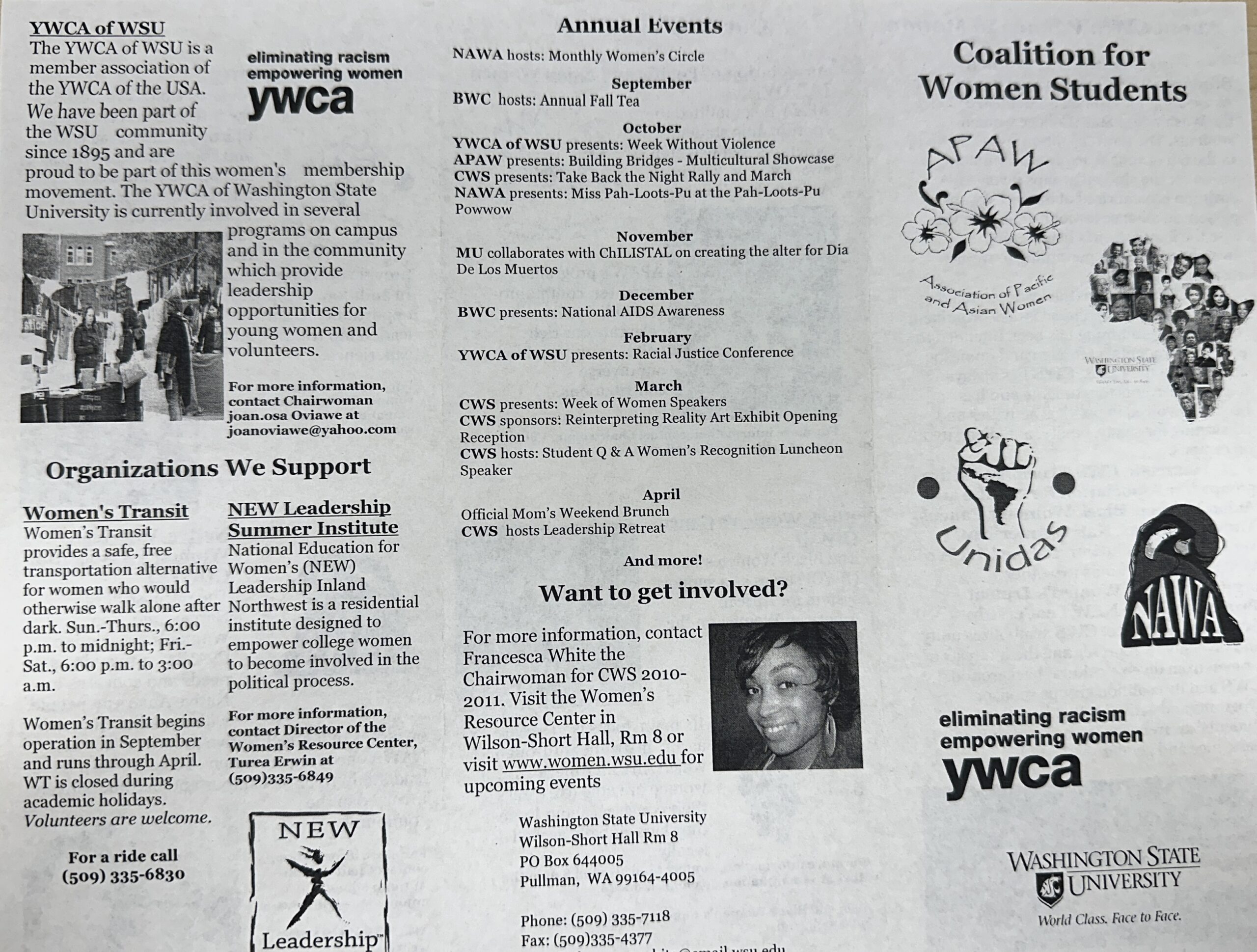
- 1993: The Association for Women Students at WSU (ASW) adopts the term “coalition” and the name changes to The Coalition for Women Students (CWS).
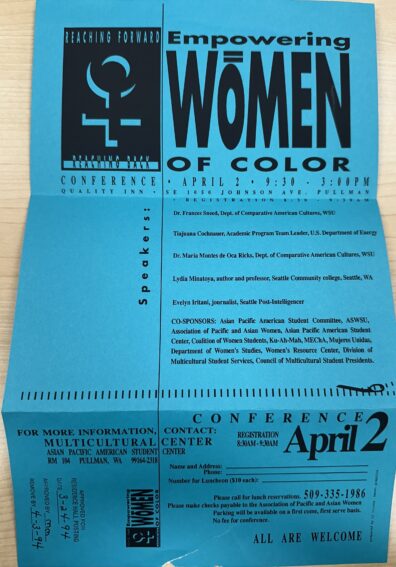
- 1994: April 2, 1994, the “Empowering Women of Color Conference” takes place at the Quality Inn in Pullman and is co-sponsored by Department of Women’s Studies along with other co-sponsors listed on the poster.
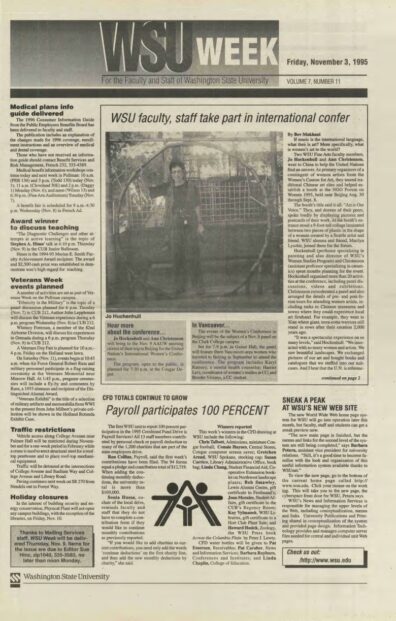
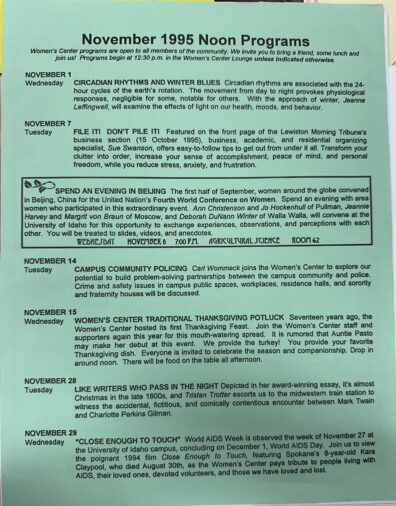
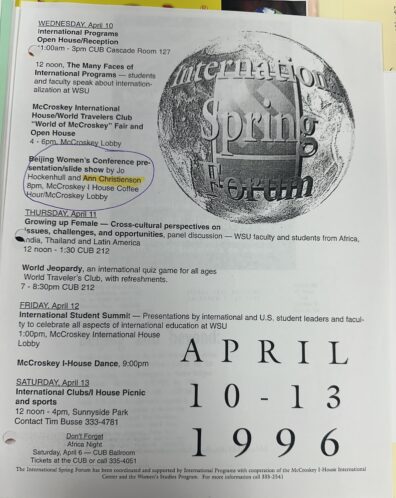
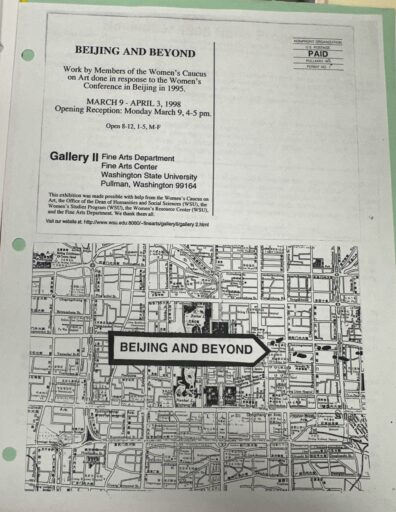
- 1995: Jo Huckenhull and Ann Christenson (Fine Arts faculty members) went to China to help the United Nations. They were primary organizers of a contingent of women artists from the Women’s Caucus for Art.
- 1996: the Jo Hockenhull Distinguished Lecture Series launched to honor Hockenhull and her dedication to units and initiatives supporting diversity, the liberal arts, free speech, and critical thinking.
- 1996: The first annual Women and Leadership Forum and the first annual women of distinction and woman of the year awards begin.
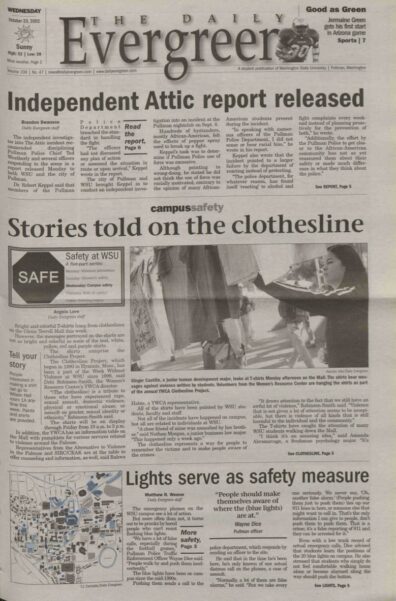
- 1996: Week Without Violence begins at WSU by YWCA initiation, and The Clothesline Project (which began in 1990, Hyannis, Mass) becomes part of Week Without Violence since 1996 as well.
2000-2010
- 2000: January 11, The Association for Faculty Women of WSU establish the Samuel H. Smith Leadership Award.
- 2001: Washington State University became a regional host site for the National Education for Women’s Leadership Program.
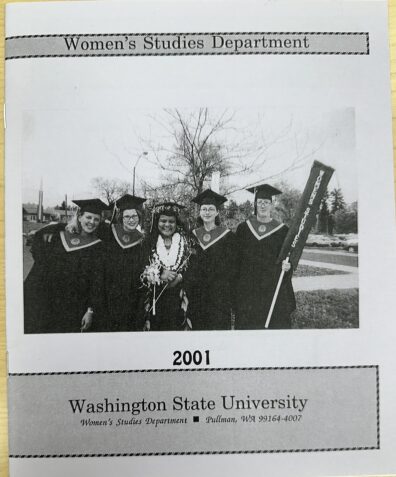
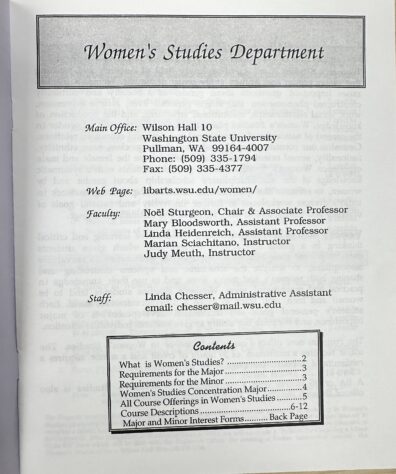
- 2001: Women’s Studies Department shares informational pamphlet about Women’s Studies Major and Minor.
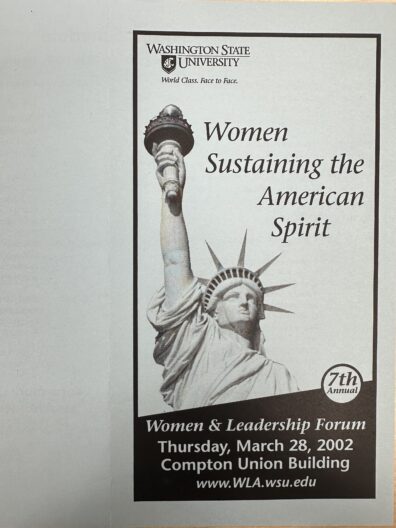
- 2002: March 28, the 7th Annual Women and Leadership Forum entitled “Women Sustaining the American Spirit” is held at Compton Union Building WSU.
- Clothesline Project news clipping in 2002.
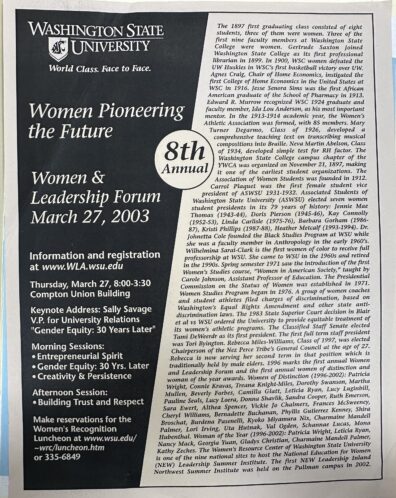
- 2003: March 27, the 8th Annual Women and Leadership Forum entitled “Women Pioneering the Future” is held at Compton Union Building WSU.
- 2005: The Women’s Resource Center began reporting to the Vice President for Equity and Diversity.
2011-2024
- 2018: In July, WSU faculty launched the Program in Women’s, Gender, and Sexuality Studies (WGSS). The development of the new WGSS interdisciplinary program and its administrative move under the umbrella of the English Department. The program began the major in Women’s Studies and a minor in Women’s Studies as well as a minor in Queer Studies for undergraduate students.
- 2018: On October 18, WGSS co-sponsored a catered lunch with Jordan Schnitzer Museum of Art (JSMA) and talked informally with artist Kate Gilmore prior to Gilmore’s talk, titled In Your Way.
- 2018: On October 29, WGSS publicly protests the U.S. Department of Health and Human Services efforts aimed to re-define trans people out of existence by releasing a statement on de-recognition of transgender people on its website: https://wgss.wsu.edu/2018/10/13/statement-on-de-recognition-of-transgender-people/
- WGSS faculty also read the statement at the 2018 InQueery Symposium, Queer (Trans)formations: Envisioning the Future of Queer Theory and Politics, on Monday, October 29, in the Elson S. Floyd Cultural Center. This was followed by keynote speaker C. Riley Snorton’s presentation, “Thinking Race, Rethinking Sex: Towards a New Trans History.”
- 2019: WSU held a research symposium on gender and colonialism on Sunday April 28 at the Dengerink Administration Building in Vancouver. The Gender and Colonialism Symposium was funded through the WSU 2018 Arts and Humanities Fellowship, which was awarded to Sue Peabody, professor of History and Affiliate Faculty in the Program in Women’s, Gender, and Sexuality Studies.
- 2024: The Graduate Certificate in Women’s, Gender, and Sexuality Studies began in fall 2024.